Chapter 7: The Seal and Envelope System
As economies grew more complex, the token system evolved. Tokens began to be enclosed in hollow clay balls covered with seal impressions.
This system makes no sense for accounting. It makes perfect sense for money.
The Envelope System
Around 3500 BC, a new technology appeared: the clay envelope or bulla.
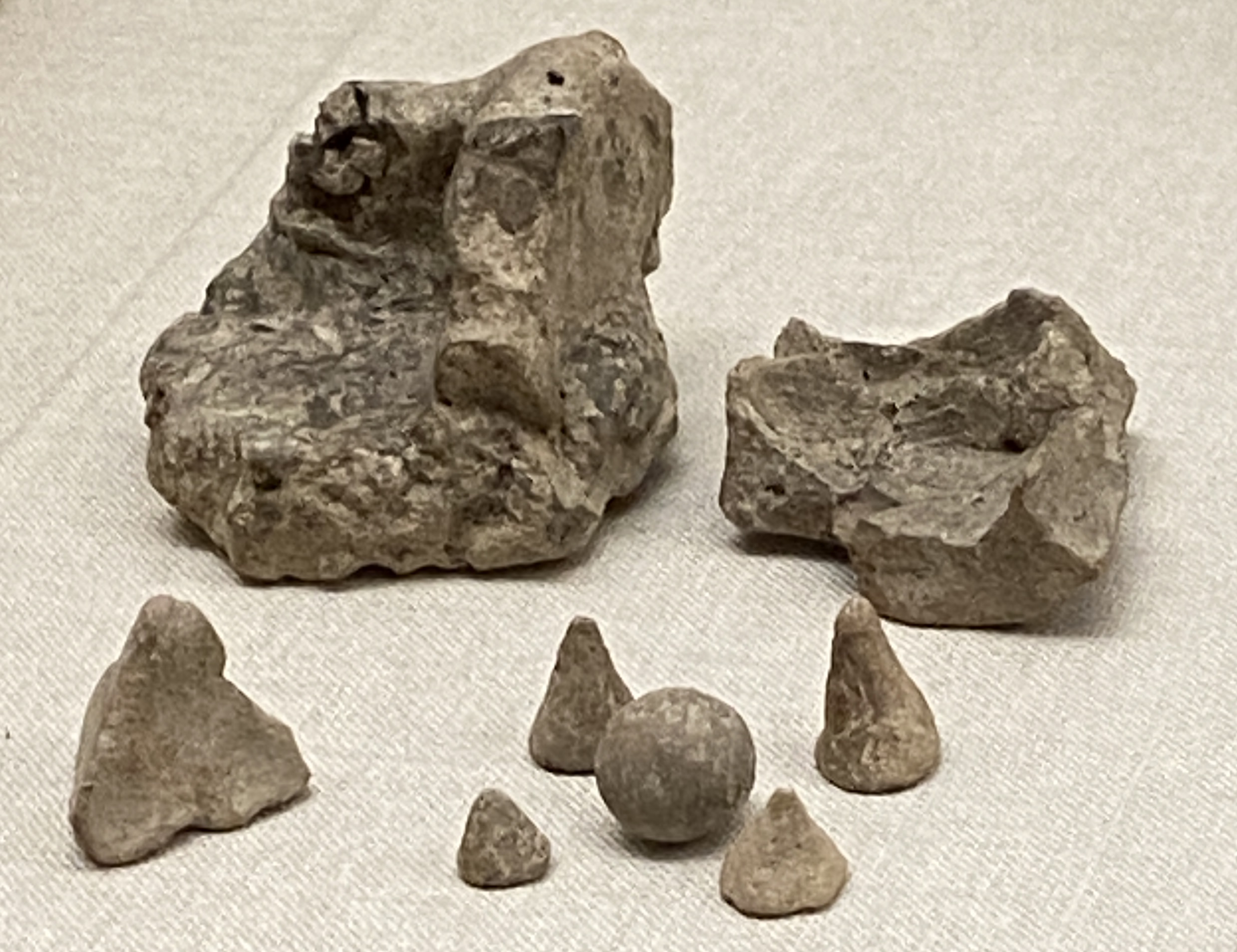
A clay bulla (hollow ball) containing tokens, with seal impressions on the surface.
The process:
- Tokens placed inside a ball of wet clay
- Clay sealed closed, encasing tokens
- Cylinder seals rolled across surface, leaving impressions
- Envelope dried and hardened
To access the tokens, you had to break the envelope. This destroyed the seal impressions.
The Puzzle for Accounting
If tokens were commodity counters, this system is deeply puzzling.
Why hide counting devices? If you need to count your sheep, you need to see the counters. Sealing them inside opaque clay makes them useless.
Why make access destructive? Every time you check your count, you must break the envelope and make a new one. Enormously inefficient.
Why apply seals of authority? Seals identify who applied them. Why would routine counting require official authorization?
Why multiple seals? Many envelopes have several seal impressions. "The two, three, and four seals applied on envelopes... could correspond to the signatures of several hierarchical levels." (p. 94)
Multiple authorization levels for counting devices?
The Authentication Interpretation
The envelope system makes perfect sense as tamper-evident protection for valuable tokens. And scholars explicitly recognize this function:
"The act of sealing the tokens within the envelope would have protected them from tampering and fraud. If the contents were contested, the envelope could be broken open and the tokens verified."
—Woods, "The Study of Proto-literate Clay Envelopes" (2012), p. 3
This is direct scholarly confirmation that bullae served an anti-fraud function.
Multiple seals indicate multi-party authentication:
"The presence of the impressions of one to three seal impressions on most envelopes strongly suggest an administrative usage for these artifacts and the involvement of multiple parties in their transactions."
—Woods (2012), p. 3
Charvat's analysis of hollow clay balls adds that cylinder seals (rolled to produce continuous patterns) indicated institutional authority, while stamp seals indicated individual signers:
"The fact that the HCB bear predominantly cylinder-seal impressions probably indicates that the HCB reflect the activities of institutions... The presence of stamp-seal impressions on HCB probably visualizes the participation of human individuals (co-signing or counter-signing?)"
—Charvat, "Spheres of Interest," p. 5
This is exactly how modern financial instruments work: institutional endorsements combined with individual signatures create layered authentication.
Consider how the system worked:
A set of tokens representing value is placed in an envelope. The envelope is sealed by an authorized person whose seal identifies them. The sealed envelope can be transported, stored, or transferred. Anyone receiving it can verify that it has not been tampered with.
If someone wants to check the contents, they can break the envelope—but this destroys the authentication. The tokens inside become "loose" tokens without the seal of authority.
This is exactly how modern authentication works:
- Bank notes have security features destroyed by tampering
- Sealed packages show if they have been opened
- Digital signatures become invalid if content is modified
The Impressions on the Outside: Serial Numbers, Not Contents
A crucial innovation appears on some envelopes: impressions of shapes on the outside surface.
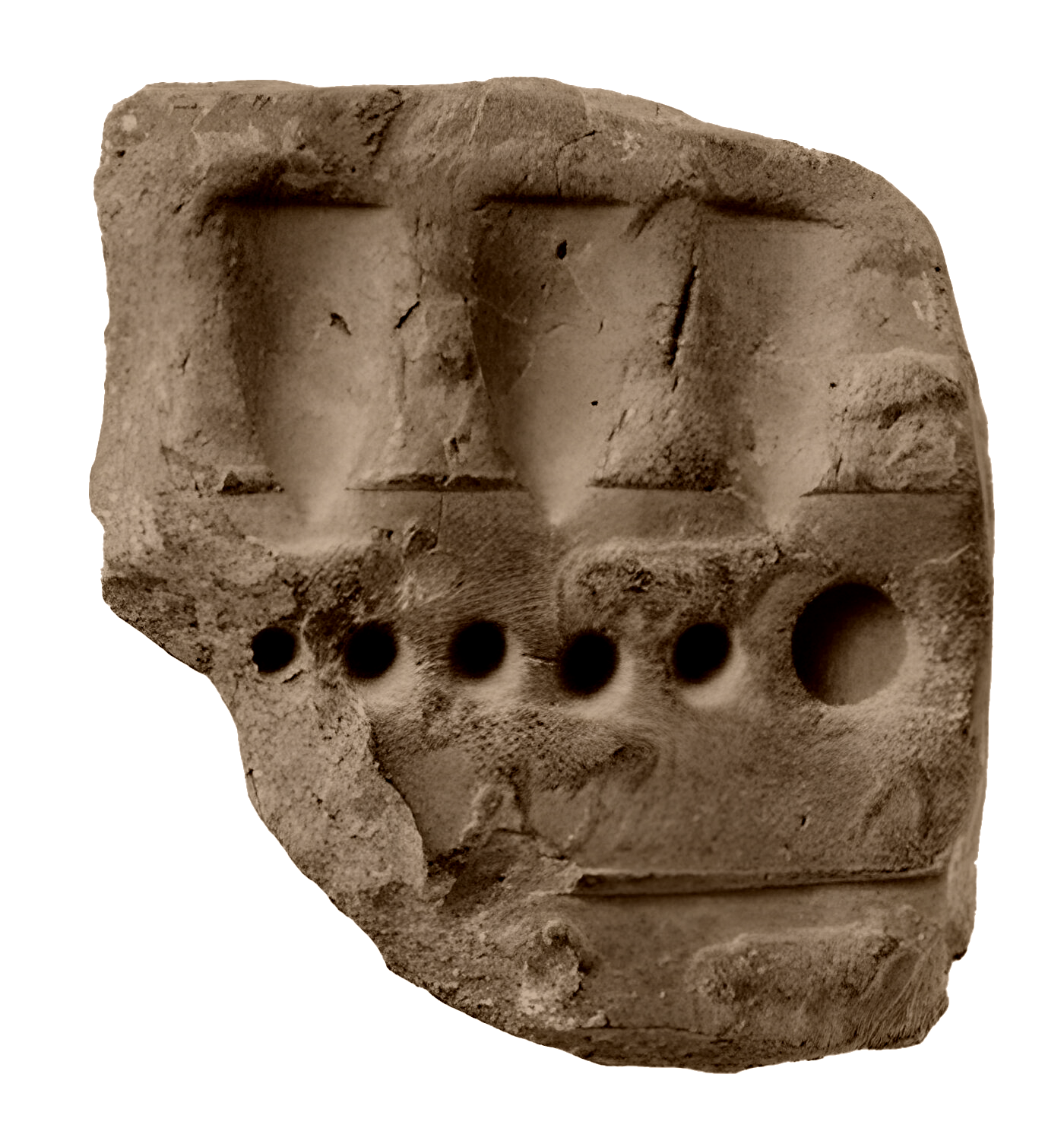
Impressed tablet showing external markings—serial numbers for identification.
Scholars have long claimed that these impressions matched the tokens inside—that scribes impressed the enclosed tokens onto the surface before sealing the envelope. But think about this for a moment.
How can you impress shapes on the outside of an envelope when those shapes are locked inside?
The physical sequence does not work. To impress a token, you press it into wet clay. But if the token is already sealed inside, you cannot press it onto the outside surface. The conventional explanation requires an awkward procedure: impress first, then insert, then seal—and somehow the impressions perfectly match the contents.
I propose a different interpretation.
The external impressions were not descriptions of the contents. They were serial numbers.
The impressions served as identifiers—like account numbers or usernames—so the authenticating administrator could locate the matching record. Here is how the system actually worked:
- The maker generates a random combination of cryptomorphs
- Two identical sets are created
- One set goes into Clay Ball A (the "money" given to the owner)
- The other set goes into Clay Ball B (the "record" kept by the administrator)
- Both balls receive the same pattern of external impressions
- These matching impressions link the two balls together
When the owner wants to authenticate, the administrator looks at the external impressions, finds the matching record ball, breaks open both, and compares the contents.
The external impressions are like a username. The internal cryptomorphs are like a password. The username tells you which account to check. The password proves you are the legitimate owner.
This explains why the same seal impressions appear on multiple envelopes—they identify the administrator or institution, not the specific contents. It also explains why some envelopes have multiple different seal impressions—multiple levels of authentication, like a document requiring several signatures.
"While the string of tokens could be checked at all times, it was not possible to verify the contents of an envelope without breaking it."
—Schmandt-Besserat, p. 66
Exactly. The external impressions were never meant to verify contents. They were meant to identify which record to retrieve when verification was needed.
The Origin of Writing
The impressions on envelopes became the first writing.
Once you can record what is inside an envelope without opening it, you can record other things too. The impressions standardized into signs. Signs became writing.
"The signs were not pictures of the items they represented but rather the pictures of tokens used as counters in the previous accounting system."
—p. 7
Writing did not emerge from commodities. Writing emerged from recording what was in the money.